How can landowners be convinced to give Nature-based Solutions a chance? How can complex permitting procedures, financing, and the long-term maintenance of measures be managed? And what can be done when a good idea encounters the realities of administration and a lack of time?
These questions were also explored by the LAND4CLIMATE project partners during the most recent peer-to-peer (P2P) learning events held in Aachen and later in Košice.
Aachen: When trust is more important than technology
The third peer-to-peer meeting took place in October 2025 in Aachen. The main topic was the implementation of Nature-based Solutions on private land, where success depends not only on technical solutions, but above all on people. From the very beginning, it was clear that regions are at different stages – some are still in the planning phase, while others are already implementing measures and seeing the first results in the field.
The discussions focused on cooperation with landowners. Partners shared experiences with both scepticism and trust. It became clear that general environmental arguments are often not enough. Much more effective are concrete benefits for land management – such as water retention, erosion protection, or resilience to drought.
Another key topic was financing after the project ends. Partners emphasised the need to link project funding with national support schemes and to ensure long-term maintenance. An important insight also emerged: smaller and simpler measures can be the best starting point for larger changes.
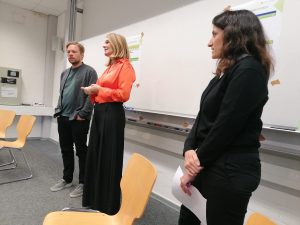
Košice: From Plans to Implementation
When results speak for themselves
A major benefit of the P2P meetings were field visits to implemented measures. Visible results help better convince municipalities and landowners of the value of implementation.
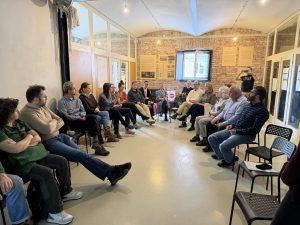
The atmosphere of the workshops showed that peer-to-peer learning is not only about presentations, but above all about open discussion, sharing mistakes, and finding solutions. Participants also appreciated the opportunity to talk about problems and failures, which help other regions to better prepare themselves.
Small steps, big impact
One of the key messages from both meetings is that even small measures can deliver significant results. Simple solutions often represent the first step towards systemic change and, at the same time, build public trust in Nature-based Solutions.